
Dangerous Goods Classification and Packaging Requirements for International Shipping
Dangerous goods transport is the most technically demanding domain in international logistics. Once cargo is classified as dangerous, every step — classification, packaging, documentation, and carrier selection — is governed by mandatory regulations. Non-compliance means more than returned shipments or fines; leaks, fires, and explosions can result in loss of life and termination of business operating licenses. This guide outlines the classification system and packaging requirements for compliant dangerous goods shipping.
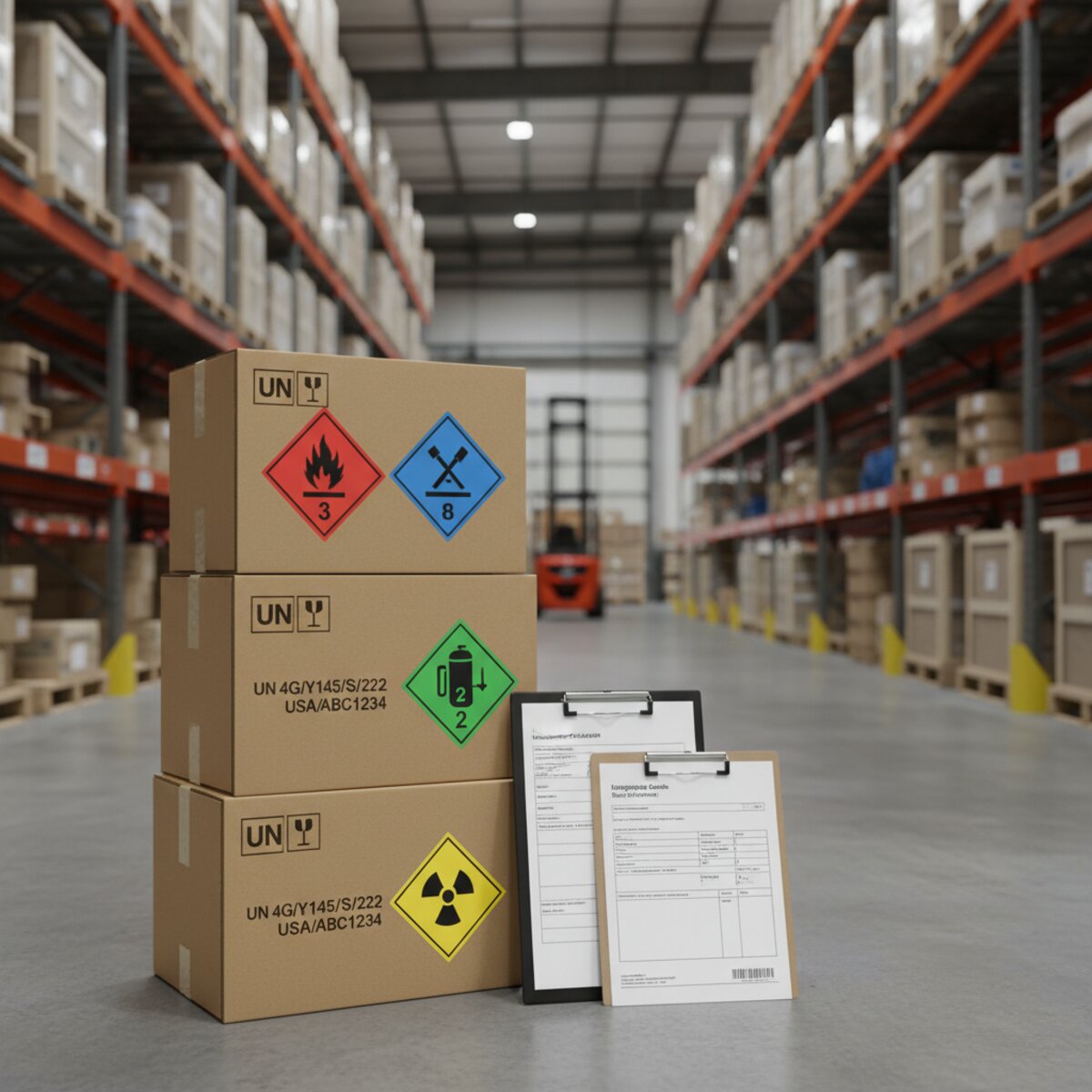
I. The Nine Classes of Dangerous Goods
Under the United Nations Model Regulations on the Transport of Dangerous Goods, hazardous materials are divided into nine classes:
Class 1 — Explosives: Includes gunpowder, commercial explosives, fireworks, and detonators. Subdivided into six divisions (1.1-1.6), with lower numbers indicating greater explosive hazard. International transport of explosives requires special approvals, and most shipping lines outright refuse Class 1.1 and 1.2 cargo.
Class 2 — Gases: Compressed, liquefied, refrigerated liquefied, and dissolved gases. Common examples include oxygen cylinders, propane, aerosol sprays, and lighter fuel. Class 2.1 flammable gases (e.g., acetylene) and Class 2.3 toxic gases (e.g., chlorine) face the strictest transport restrictions.
Class 3 — Flammable Liquids: The most frequently encountered dangerous goods category in international trade. Paints, coatings, adhesives, fragrances, fuel additives, and many organic solvents fall into this class. Assigned to three packing groups (PG I/II/III) based on flash point and boiling point. Liquids with flash point below 23°C and boiling point below 35°C are PG I — the highest risk level.
Class 4 — Flammable Solids: Sulfur, matches, nitrocellulose, certain metal powders, and more. Also includes spontaneously combustible substances (e.g., white phosphorus) and substances that emit flammable gases upon contact with water (e.g., calcium carbide). Class 4 goods demand exceptionally high moisture-proof packaging.
Class 5 — Oxidizing Substances and Organic Peroxides: Hydrogen peroxide, potassium permanganate, benzoyl peroxide, etc. These substances may not be combustible themselves but vigorously support combustion — mixing oxidizers with combustible materials can cause violent burning or explosion.
Class 6 — Toxic and Infectious Substances: Pesticides, certain chemical intermediates, medical waste, etc. Class 6.1 toxic substance packaging must pass drop tests and stacking tests to ensure no leakage during transport.
Class 7 — Radioactive Material: Medical isotopes, industrial radiography sources, nuclear fuel, etc. Transport of radioactive materials is jointly regulated by national nuclear safety authorities and transportation departments, with IAEA approval required for international shipments.
Class 8 — Corrosive Substances: Sulfuric acid, sodium hydroxide (caustic soda), battery fluid, etc. Capable of causing corrosive damage to skin, metals, and packaging materials. Class 8 substances require careful selection of packaging materials — incompatible containers will be compromised.
Class 9 — Miscellaneous Dangerous Goods: Lithium batteries (including in equipment), dry ice (solid carbon dioxide), magnetic materials, environmentally hazardous substances, etc. Lithium batteries represent the most common Class 9 dangerous goods in current international trade — nearly all battery-powered products (phones, laptops, power tools) fall into this category.
II. UN Numbers and Proper Shipping Names
Every dangerous substance has a four-digit UN number (e.g., UN1993 for flammable liquids, n.o.s.) and a corresponding Proper Shipping Name (PSN). Both the UN number and PSN must appear on the Dangerous Goods Declaration (DGD).
A common misconception: many assume that the classification on an MSDS (Material Safety Data Sheet) equals the transport classification. In reality, MSDS follows GHS standards while dangerous goods transport follows UN standards — the two classification systems are not fully aligned. For instance, a liquid product classified as GHS Category 3 (low hazard) might be UN Class 3 flammable liquid for transport purposes — the stricter UN classification always governs shipping.
III. UN Packaging Specifications and Markings
Dangerous goods must use UN-certified packaging bearing the UN mark, which includes: packaging type code, dangerous goods class, packing group, maximum gross mass, year of manufacture, country of manufacture, and testing authority code. For example: UN 1A2/Y150/S/24/CN/CCIC indicates a steel drum (1A2), tested for PG II (Y), maximum gross mass 150 kg, manufactured in 2024, China, tested by CCIC.
Different dangerous goods classes and packing groups correspond to specific UN packaging types. Class 3 flammable liquids PG II typically use UN 1A2 steel drums or UN 3H1 plastic jerricans. Lithium batteries require UN-specification fiberboard boxes (4G) with internal short-circuit protection. Inner containers within combination packaging (glass bottles, plastic bottles) must also individually pass pressure testing requirements.
Packaging seal integrity is a rigid requirement: liquid dangerous goods packaging must show zero leakage under 95 kPa pressure differential. Flammable liquids with closed-cup flash points below 60°C require venting devices to prevent internal pressure buildup. These are not recommendations but mandatory standards — any non-compliant packaging will be intercepted by terminal safety inspections before container loading.
IV. Transport Documentation and Marking Requirements
Dangerous goods transport requires a complete documentation chain: Material Safety Data Sheet (MSDS/SDS), Dangerous Goods Declaration (DGD), packaging certificates, and a Transport Condition Appraisal Report (issued by a qualified third-party testing agency). The Transport Condition Appraisal Report is a prerequisite for booking — without it, shipping lines will not accept dangerous goods bookings.
Containers must display dangerous goods placards externally (10 cm × 10 cm diamond-shaped hazard class labels), one on each of the four sides. If a container holds multiple hazard classes, corresponding placards for each class are required. Additionally, UN number markings and marine pollutant marks must be affixed where applicable.
Dangerous goods bookings typically need to be made 7-10 working days ahead of regular cargo. This is because shipping lines must review the full set of dangerous goods documentation, determine stowage positions (dangerous goods containers are usually placed on deck or in designated zones), and control the total quantity of hazardous cargo per vessel. Last-minute dangerous goods bookings submitted close to sailing dates are almost never accepted.
V. Compliance Risks and Common Violations
The most severe violation is deliberate concealment — declaring dangerous goods as general cargo to save on freight costs and simplify the booking process. Once detected, this results not only in direct losses from cargo return and fines but also potential blacklisting by the shipping line, affecting all future ocean freight bookings.
Another common issue is inaccurate classification. Examples include lithium battery equipment (UN3481) declared simply as "electronics," or flammable liquids (UN1993) listed by product name without indicating the hazard class. The consequences of inaccurate classification are equally serious — in the event of an incident, insurance payouts may be denied due to misdeclaration.
Dangerous goods transport is not a one-off exercise; it requires building a comprehensive management system: a product hazard characteristics database, a compliant packaging supply chain, a dual-review documentation procedure, and regular regulatory training. Investing in upfront compliance costs is far less expensive than bearing the cost of a single incident.